About Enatta
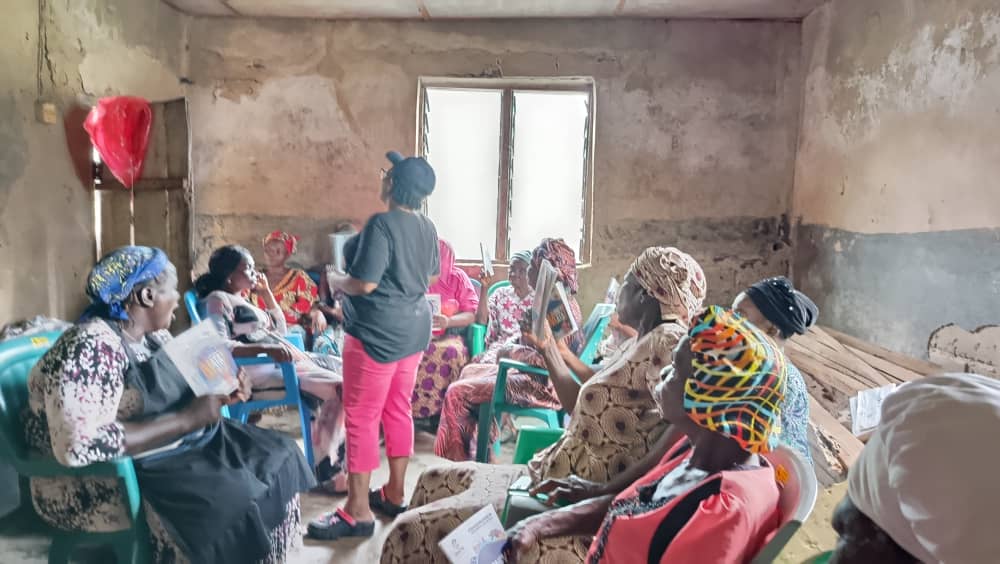
Enatta Foundation began in 2022 with a commitment to supporting fisherwomen beyond survival. Through practical livelihood support and financial empowerment, we help coastal communities build stronger, more secure futures.
The Story That Built Our Journey
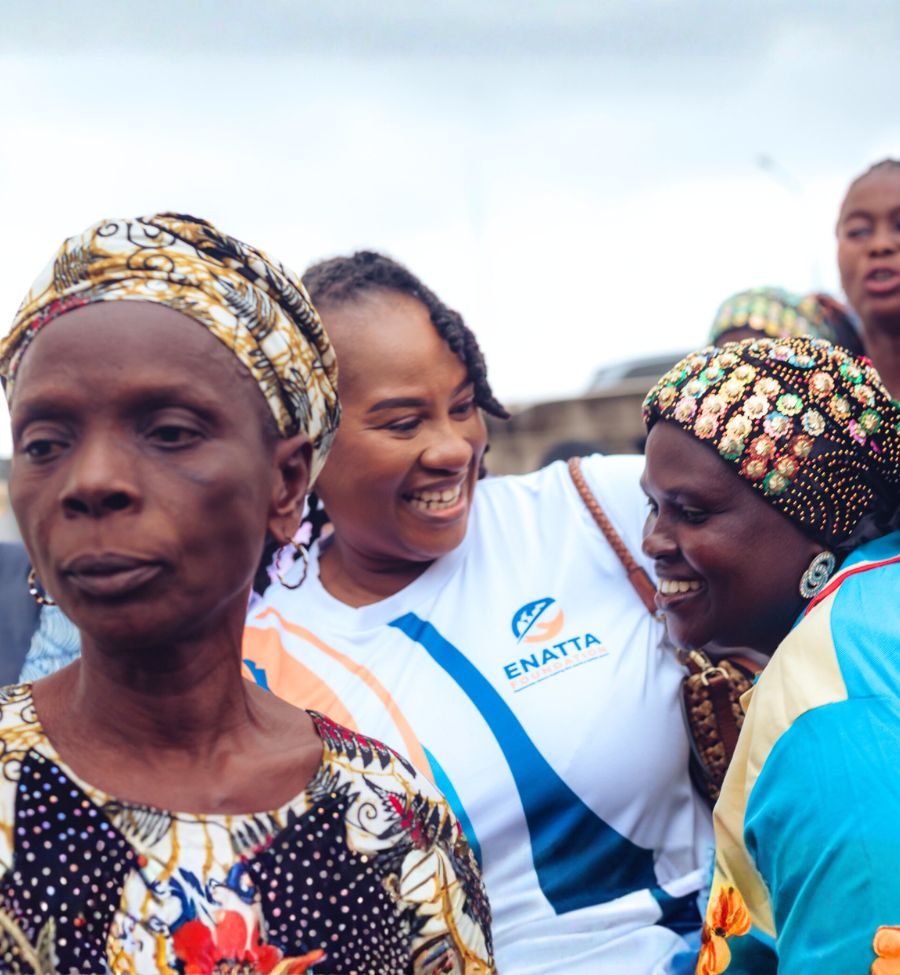
Enatta Foundation began in 2022 with a conversation that changed everything. Our founder, Mrs Adijat Okuyelu (Mama Enatta), saw beyond the daily struggles of Nigerian fisherwomen and recognized their untapped potential. What started as a seafood export inquiry quickly became a commitment to economic inclusion and intentional transformation.
From the beginning, our work has been guided by what we call the Livelihood Empowerment approach, a comprehensive model that addresses poverty through integrated interventions rather than isolated handouts.
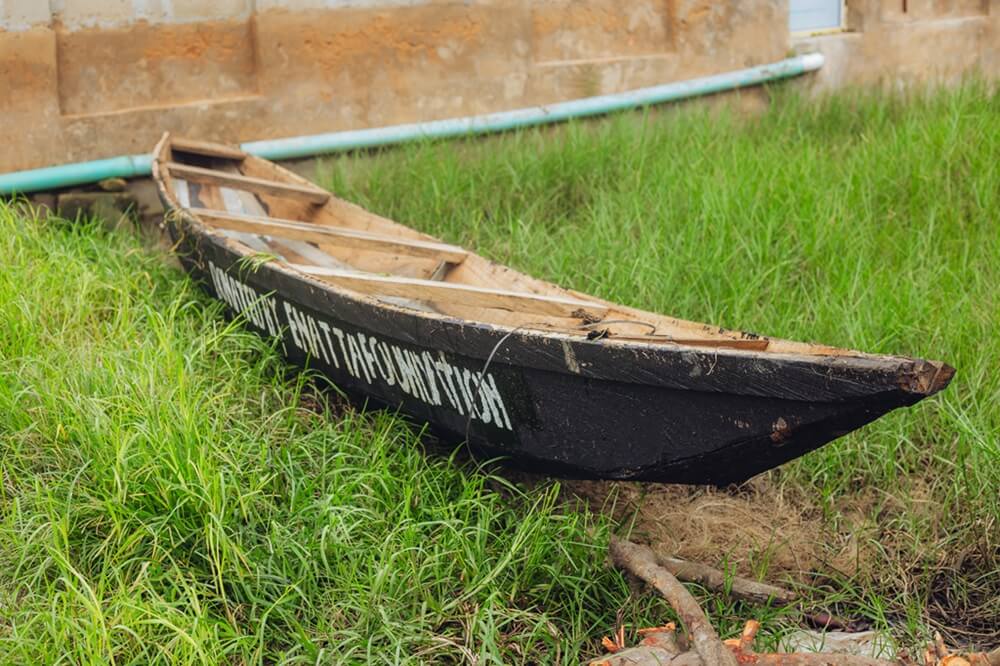
The Boat Project was our first step in activating livelihoods. We provided 16 durable, locally built boats to women across 8 communities, giving them the primary tool they needed to engage in income-generating activity. But we understood that boats alone would not create lasting change. As productivity increased, we focused on building their financial capability through Money Mata, our financial literacy initiative that taught women to manage their income and plan for the future.
We also recognized that production without market access keeps women trapped in low-value transactions. So we connected them to larger trade platforms, including the Lagos State Trade Fair, opening doors to high-value buyers and transforming how the industry viewed their work. This market linkage became a critical part of ensuring women could sustain and grow their businesses independently.
To strengthen social cohesion and celebrate the dignity of their work, we launched The Boat Regatta. This cultural event brought visibility and new partnerships to the shores of Lagos while building trust and collective identity among the women we serve. Throughout this journey, our food parcel program has supported over 600 households, protecting families from shocks that could derail their progress toward economic independence.
Each of these programs works together under our Livelihood Empowerment approach, a graduation model designed to move women from persistent poverty to sustainable independence. From one conversation to a growing movement, Enatta Foundation continues to co-create pathways to prosperity with artisanal fisherwomen, transforming communities one woman at a time.
Our Vision
To create a future where artisanal fisherwomen thrive as empowered leaders and recognized pillars of food security.
Our Mission
Empowering artisanal fisherwomen to graduate from poverty through co-created solutions that unlock opportunity and build resilience.
Our Growing Community Reach
We currently serve eight coastal and riverine communities in Lagos State, where women are central to small-scale fishing, fish processing, and household livelihoods. These communities represent the foundation of our impact as our work continues to grow.
Isale-Akoka
Located opposite the University of Lagos along the Lagos Lagoon, Isale-Akoka is a family-based fishing community operating within a highly urban environment. Fisherfolk use both traditional and modern methods to harvest fish, crabs, and periwinkles.
Ilaje-Ebute Bariga
Ilaje-Ebute Bariga is a close-knit Ilaje community originally from Ondo State. Fishing takes place along the Lagos Lagoon and nearby marine waters, with both men and women actively involved using canoes, nets, and traps.
Oworonshoki
Situated at the foot of the Third Mainland Bridge, Oworonshoki is a major fishing hub. Women play a key role in harvesting crayfish, periwinkles, and prawns using traditional handpicking methods and traps.
Ago-Egun
Ago-Egun is a secluded Egun-speaking community with roots in the Republic of Benin. Fishing is mainly carried out by men using the traditional Akaja method, while women are responsible for fish processing and sales.
Ogudu
Ogudu fisherfolk operate along lagoon creeks that connect to the Lagos Lagoon. Fishing requires water travel, with canoes and traps commonly used to harvest fish, crayfish, and periwinkles.
Araromi
Located along the Agboyi River, Araromi is known for its hardworking women who are actively involved in crayfish and crab fishing, supporting household livelihoods and local trade.
Ajegunle
Located in the Bogunde area along the Lagos Lagoon, Ajegunle fisherfolk focus primarily on fishing and periwinkle harvesting as their main economic activity.
Agboyi
Agboyi is a remote island community without bridge access. Fishing is the main source of livelihood, with fish, crayfish, and periwinkles harvested across the island settlements.