The Boat Project
Boat Project (Livelihood Activation)
Program Overview
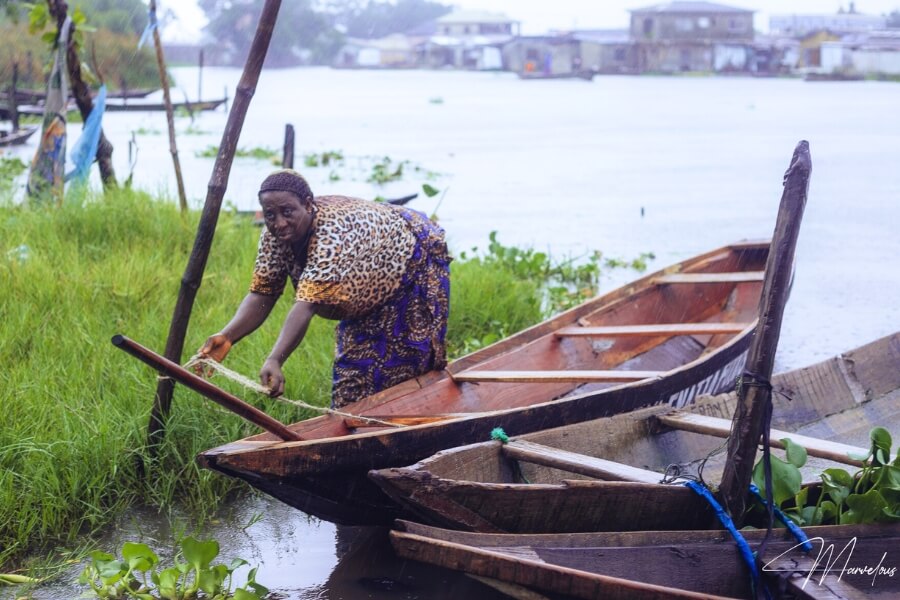
The Boat Project is Enatta Foundation’s core livelihood intervention. It addresses one of the most fundamental barriers facing fisherwomen in coastal Lagos: lack of access to productive fishing assets. Rather than introducing new trades or short-term income substitutes, the project activates livelihoods women are already skilled in but structurally excluded from.
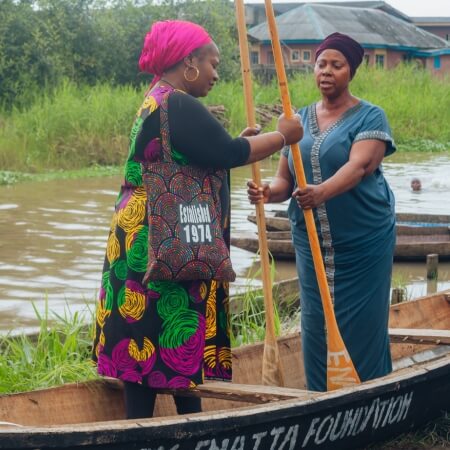
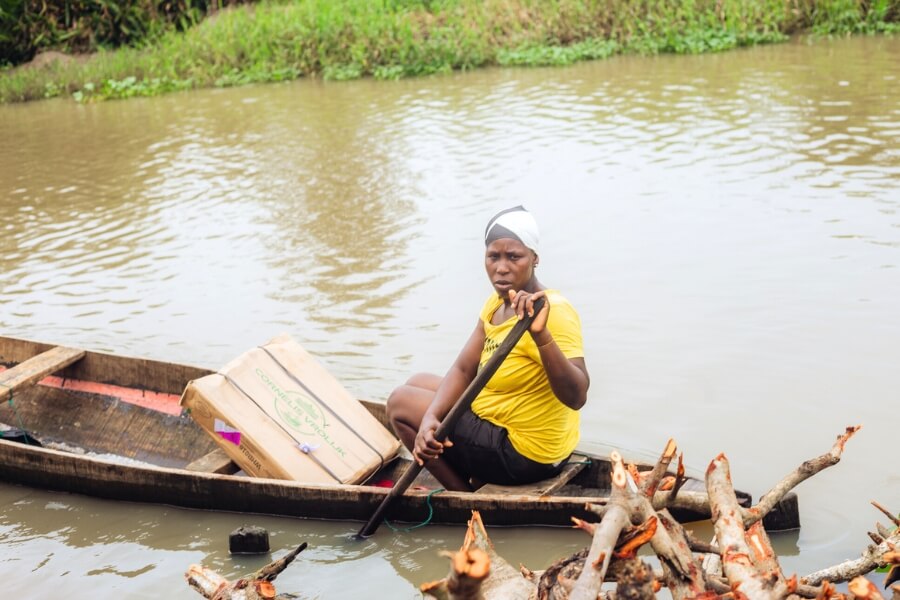
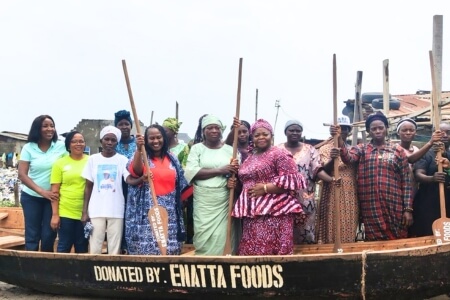
Fishing is not foreign to these women. Many have spent years learning the waters, understanding seasonal patterns, and mastering techniques passed down through generations. Yet despite their expertise, most remain locked out of independent fishing because they cannot afford boats. The Boat Project changes this by providing durable, locally built fishing boats and essential gear. This intervention restores women’s ability to fish independently, consistently, and at scale, transforming skill into sustainable income.
Why the Programme Exists
Across many fishing communities, women are experienced fishers but remain dependent on rented boats or informal access controlled by others. This dependency reduces income, increases daily costs, and exposes women to exploitation and income volatility.
Without secure access to boats, even the most skilled fisherwoman cannot translate effort into stable earnings. The Boat Project responds directly to this gap by treating productive assets as the starting point of economic dignity, not as a reward that comes later.
What the Programme Does
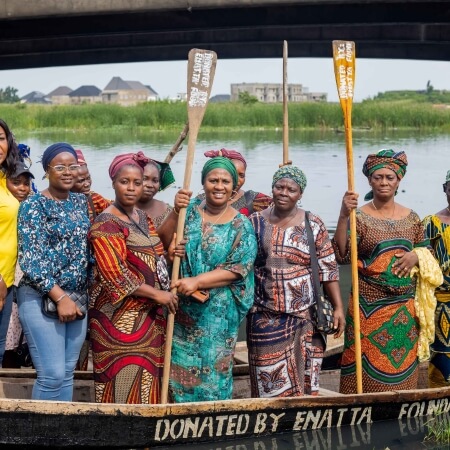
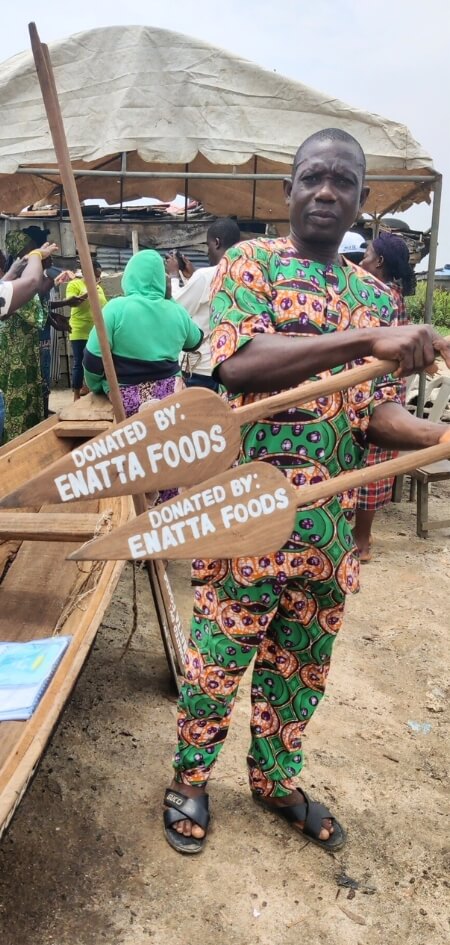
Enatta Foundation provides boats that are allocated through structured community systems, often managed through cooperatives. The boats are designed for durability and shared access, allowing multiple women to benefit while building collective responsibility.
Each boat is built locally using materials suited to the specific waterways women navigate. Allocation follows transparent criteria established with community input, ensuring fairness and reducing conflict. Women organize usage schedules, contribute to maintenance costs, and hold one another accountable for care of the asset.
The intervention is accompanied by basic governance support to ensure transparency and fair usage. This approach strengthens both individual income and community structures around shared assets.
Who It Serves
The programme serves fisherwomen in riverine and coastal communities across Lagos, including Ogudu, Oworonshoki, Isale Akoka, Ilaje Ebutte, Ago Egun, Araromi, Agboyi, and Ajegunle.
Outcomes and Long-Term Impact
- Increased access to productive fishing assets for women previously excluded
- Income growth estimated between 60 and 100 percent among beneficiaries
- Reduced dependency on rented or informally controlled boats
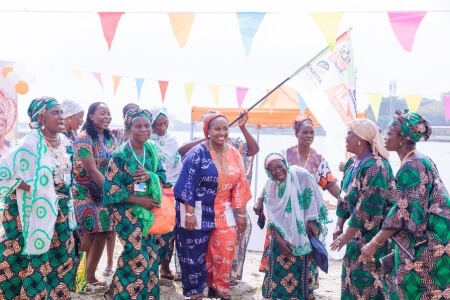
- Stronger cooperative systems and shared asset governance
- Restored confidence in fishing as a viable and dignified livelihood