

The Smoke Nobody Talks About

Whenever household air pollution in Nigeria enters public conversation, it tends to settle around one image: a woman at a domestic fire, cooking for her family in a poorly ventilated room. That picture is not inaccurate. But it crowds out another reality that is, in several respects, more severe.
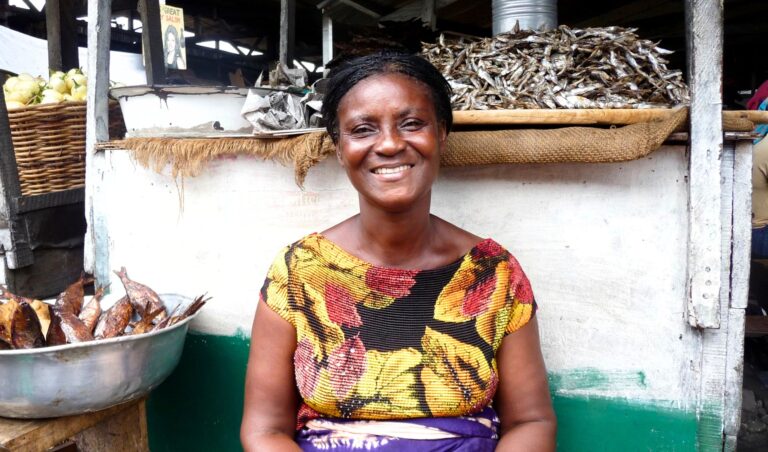
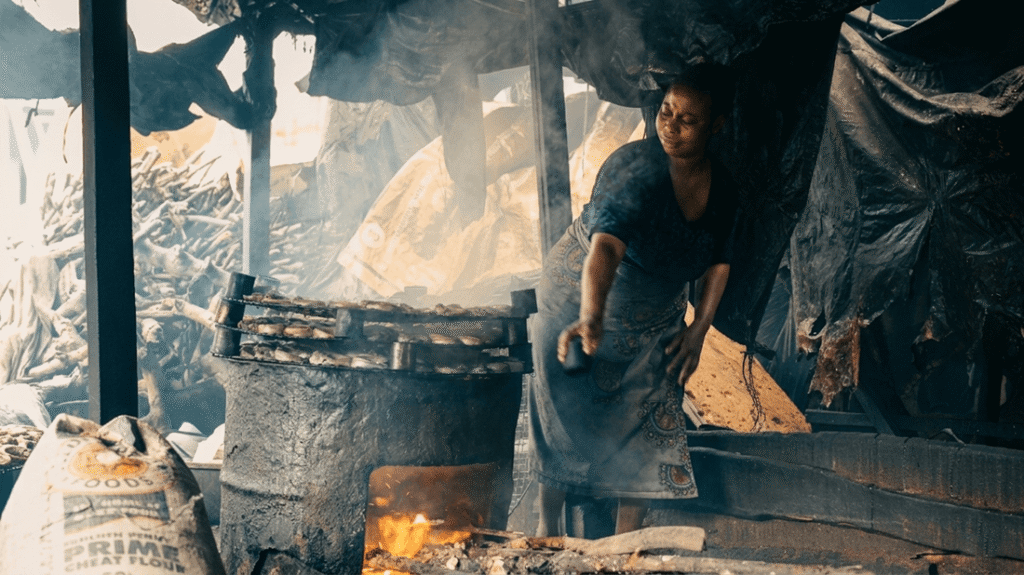
In coastal Lagos, women who process fish for a living spend the better part of their working days crouched over open-fire kilns burning wood at sustained high heat. This is an occupational exposure, one concentrated and prolonged, and the public health community has paid far less attention to it than it deserves.
A 2022 University of Michigan study by Weyant, Amoah, Bittner and colleagues, published in Environmental Health Perspectives, measured pollutant exposures among fish smokers in two coastal cities in Ghana and found that carbon monoxide and PM2.5 exposure was 2.6 times greater among fish smokers than among a control group of women in other occupations. More striking was the comparison with domestic cooking: fish smokers recorded 24-hour carbon monoxide exposures seven times greater than women using biomass for household cooking in non-fishing villages. Ghana is one node in a pattern that runs across coastal West Africa. The occupation is the same, the fuel is the same and the kilns are structurally identical to what women use in coastal Lagos. The distinction the study draws matters because it challenges the assumption that the domestic kitchen is where the problem is most acute. For a fisherwoman, the kiln can be a separate and compounding source of harm.
The Nigerian clinical evidence makes this harder to ignore. A case-control study by Dienye, Akani and Okokon, published in African Health Sciences in 2016, examined 210 women engaged in fish smoking in Oyorokoto, a fishing settlement in the Niger Delta, alongside a matched control group. The fish smokers showed a mean peak expiratory flow rate of 321 L/min, against 400 L/min among the controls, a measurable deterioration in lung function pointing toward obstructive airways disease. Rates of chronic cough, chest pain, catarrh and breathlessness were significantly elevated among fish smokers across every indicator measured. A related study drawing on the same Niger Delta community, by Umoh and colleagues and published in the Nigerian Medical Journal, found that 19.9% of women with long-term occupational exposure to fish-smoking biomass had developed chronic bronchitis, against just 2.3% of the controls.
The body, in other words, is absorbing a cost it was never designed to carry.
What biomass combustion releases is not smoke in any simple sense. It produces fine particulate matter small enough to pass through the airways and settle into lung tissue, where it triggers chronic inflammation. It also releases carbon monoxide, nitrogen oxides, formaldehyde, benzene and polycyclic aromatic hydrocarbons. A study of rural Nigerian women using biomass for domestic cooking, published in the Global Journal of Health Science, found indoor PM2.5 concentrations at a median of 1,575 micrograms per cubic metre, roughly 63 times the WHO daily guideline of 25 micrograms per cubic metre. For women working directly over open-fire fish kilns, the figure is likely worse. Over years of daily exposure, the cumulative effect on lung architecture is not reversible.
The broader consequences reach beyond respiratory disease. Household air pollution from biomass burning has been linked to stroke, ischaemic heart disease and lung cancer. The WHO currently estimates that household air pollution from solid fuel cooking causes around 3.2 million premature deaths globally per year. In Nigeria specifically, close to 130,000 deaths per year are attributed to household air pollution from indoor burning of cooking fuel, according to data compiled by the United Nations Environment Programme. Fisherwomen are absorbing an occupational dose of this burden on top of whatever they already encounter at home.
What makes this particularly worth examining is how thoroughly it has been overlooked. The clean cooking movement has grown in ambition and reach over the past decade, but the conversation almost always centres on the household stove. The fish kiln, which functions simultaneously as a livelihood tool and a chronic health hazard, rarely enters the same frame. In coastal Nigeria, where artisanal fish processing sustains entire communities and women are its primary labour force, that gap has real consequences.
Transitioning fisherwomen from open-fire biomass kilns to LPG-based processing is, at its core, a health intervention. It removes the most concentrated source of a woman’s daily smoke exposure. The improvements to fish quality and reduction in post-harvest losses matter enormously, but so does the fact that her lungs get a reprieve.
The smoke at the fish kiln has been there for generations. That its health costs have gone largely undiscussed for so long is not evidence that the costs are small. It is evidence that the women bearing them have not been visible enough in the conversations that could change things.